When you think of reviews in advertising, you probably think of stars. But our Trust Advantage research shows there's more to it than simply displaying a rating.
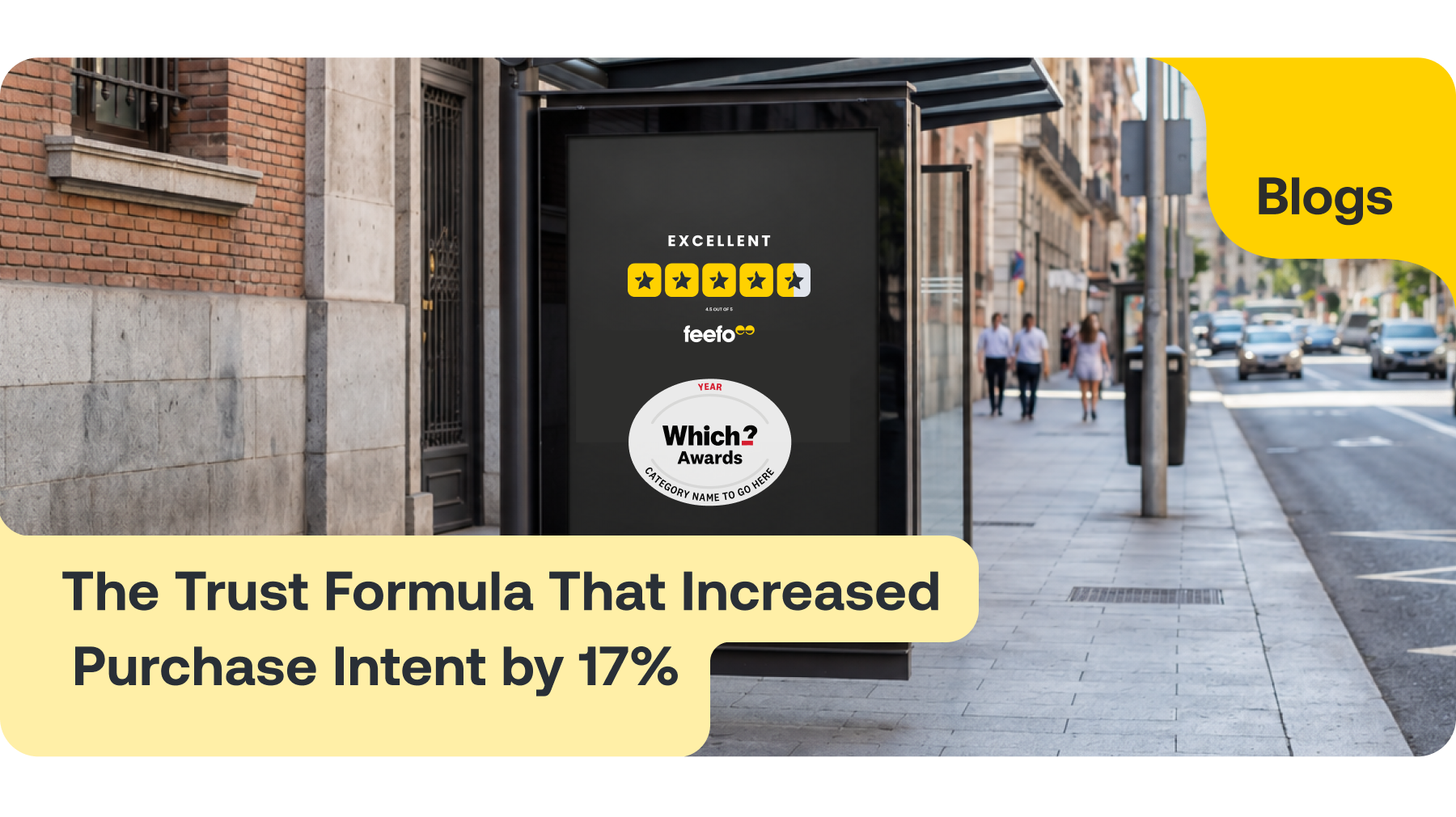
Consumers shown both a Feefo review rating and a Which? endorsement were 17% more likely to express strong purchase intent when compared to a single review platform logo.
At first glance, that might seem surprising. Both are trust signals. Both are designed to help consumers make decisions. So why does combining them have such a significant impact?
The answer lies in how people make considered purchases. Buyers of holidays, insurance policies, cars and other high-value purchases aren't simply looking for reassurance in their research. They're looking for multiple signals that confirm what they're reading is credible.
A customer review tells them what others experienced, while an independent endorsement tells them whether that experience stands up to external scrutiny.
Together, they create a more complete picture, reducing uncertainty from multiple angles, increasingly important in a buying journey where nearly 70% of consumers consult more than one review source before making a decision.
Why buyers don't rely on a single source
For considered purchases, most buyers don't stop at the first review they see. They compare ratings, read customer feedback, visit multiple review sites and look for signs that different sources tell a consistent story.
Our research found that nearly 70% of consumers consult two or more review sources during the buying process. More than half (59%) say they trust brands more when they see feedback from multiple providers.
That's because reviews no longer serve a single purpose. Buyers use them to discover brands, compare options and validate claims. The more important the purchase, the more likely they are to cross-check what they're seeing elsewhere.
This behaviour helps explain why combining trust signals can outperform relying on one alone. When buyers encounter information from independent sources that tell a consistent story, confidence grows. And when confidence grows, so does purchase intent.
The two questions every buyer wants answered
If buyers are already consulting multiple sources, the next question is what they're looking for when they do.
The answer isn't simply more information. It's different kinds of evidence.
A customer review answers one question:
Did real customers actually experience what this brand promises?
This is where purchaser verification becomes important. Feedback linked directly to a confirmed transaction carries more weight because buyers know it comes from someone who actually made a purchase.
An independent endorsement answers a different question:
Has this been assessed against an external standard?
Where reviews provide evidence of customer experience, endorsements provide evidence of independent scrutiny.
Neither replaces the other. In fact, they're most powerful when used together.
One helps buyers trust the experiences of other customers. The other helps them trust the quality and credibility behind those experiences.
That distinction helps explain why consumers shown both a Feefo review rating and a Which? endorsement were more likely to buy than those shown a single review platform alone.
Why the source of a review matters
If customer reviews play a unique role in the buying journey, the way those reviews are collected matters too.
Not all review platforms operate in the same way. Open-submission platforms allow anyone to leave a review, whether they made a purchase or not. Purchaser-verified platforms collect feedback only from customers following a confirmed transaction.
To buyers, this difference is important. A review linked directly to a purchase provides an additional layer of confidence because it answers a simple question: did this person actually buy from the business?
Feefo's model is built around that principle. Every review is linked to a verified transaction, with feedback collected directly from confirmed customers.
Among consumers familiar with both models, purchaser-verified reviews were twice as likely to be trusted as reviews collected through open-submission platforms.
It helps explain why purchaser verification plays such an important role in the trust equation. Before buyers decide whether they believe the review itself, they first need confidence in where it came from.
Why independent endorsements play a different role
Customer reviews help buyers understand what other people experienced. Independent endorsements help them answer a different question: has this been assessed by someone with no stake in the outcome?
A Which? endorsement carries particular weight because of the organisation's long-standing reputation for consumer advocacy and editorial independence. It accepts no funding from manufacturers or retailers, helping ensure its assessments are designed to reflect consumer interests rather than commercial relationships.
For buyers, that independence provides a different form of confidence to customer reviews alone. One validates what customers experienced. The other validates that those experiences stand up alongside an external assessment.
Why verification matters more than ever
The value of purchaser verification isn't increasing in isolation. It's rising alongside growing consumer concern about the reliability of online reviews more broadly.
Our research found that 63% of consumers worry about fake reviews before completing a transaction, while eight in ten believe fake reviews damage a brand's reputation.
Those concerns aren't appearing without reason. Review platforms are removing millions of reviews every year for breaching their policies. Google alone removed 292 million policy-violating reviews in 2025, while Trustpilot removed 7.4 million in 2024.
That helps explain why purchaser verification carries such weight. When trust in online review ecosystems comes under pressure, the ability to demonstrate that feedback is linked to genuine transactions becomes a competitive advantage rather than a technical detail.
Where brands miss the opportunity
Most businesses already collect customer reviews. Some also have access to independent endorsements. Yet much of that evidence only appears on product pages, landing pages or at the final stages of the buying journey.
That's a problem because buyers are forming impressions long before they reach the point of conversion.
They first encounter a brand in an advert. They compare providers on aggregator sites. They revisit options through retargeting campaigns. By the time they arrive on a product page, they may have already ruled out alternatives that failed to establish credibility early enough.
That means purchaser-verified reviews and independent endorsements should appear wherever buyers are evaluating options, not just where they're making a final decision.
The challenge for many brands isn't a lack of evidence. It's evidence arriving too late to influence the journey.
Trust compounds when evidence works together
Purchaser-verified reviews help answer one question: did real customers experience what this brand promises? Independent endorsements answer another: has this been assessed by a trusted third party?
That helps explain why consumers shown both a Feefo review rating and a Which? endorsement were 17% more likely to express strong purchase intent than those shown a single open review platform alone.
Trust isn't built through volume alone. It grows when different forms of evidence reinforce each other and appear at the moments buyers are actively evaluating their options.
The companies that win considered purchases won't necessarily be the ones with the most reviews. They'll be the ones that make trust easier to verify.
Read the full Trust Advantage report or book a consultation to learn more.