What UK consumers really think about reviews, trust, and the brands they buy from.
Independent research conducted in partnership with Censuswide – 3,000 UK consumers, February 2026.
The pressure on marketing has never been greater
Marketing budgets are under more pressure than ever. Customer acquisition costs have risen by around 40% over three years. In April 2026, IMRG recorded the lowest online conversion rate since the year 2000 – just 2.7%. As Chloe Humphrys at Shoptimised observed: “Consumers are becoming more cost-conscious and buying smarter, leading to greater competition and a longer decision cycle.”
And yet, one of the most powerful tools available to marketing teams remains significantly underleveraged: verified customer reviews. This report – built on original insights from 3,000 UK consumers – sets out what consumers actually think about reviews, what they do when they don’t trust them, and what the data shows when verified social proof is deployed where it matters most: in advertising.
Key takeaways
85% of UK consumers
check at least one review provider before completing a purchase
8 in 10 shoppers
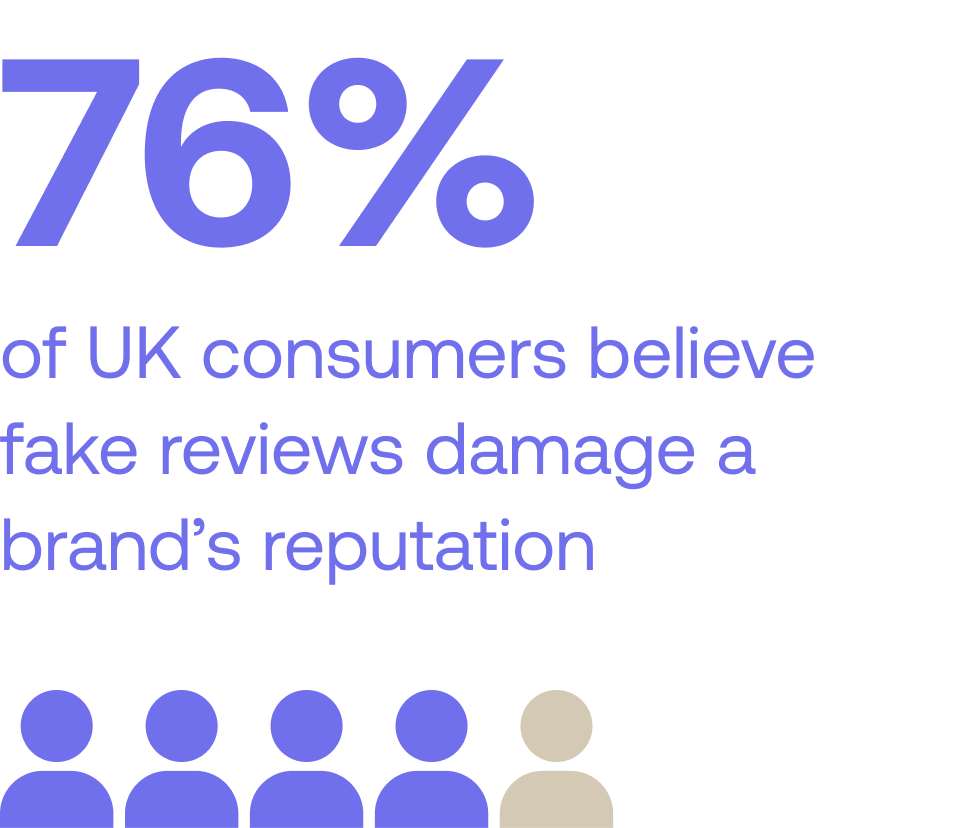
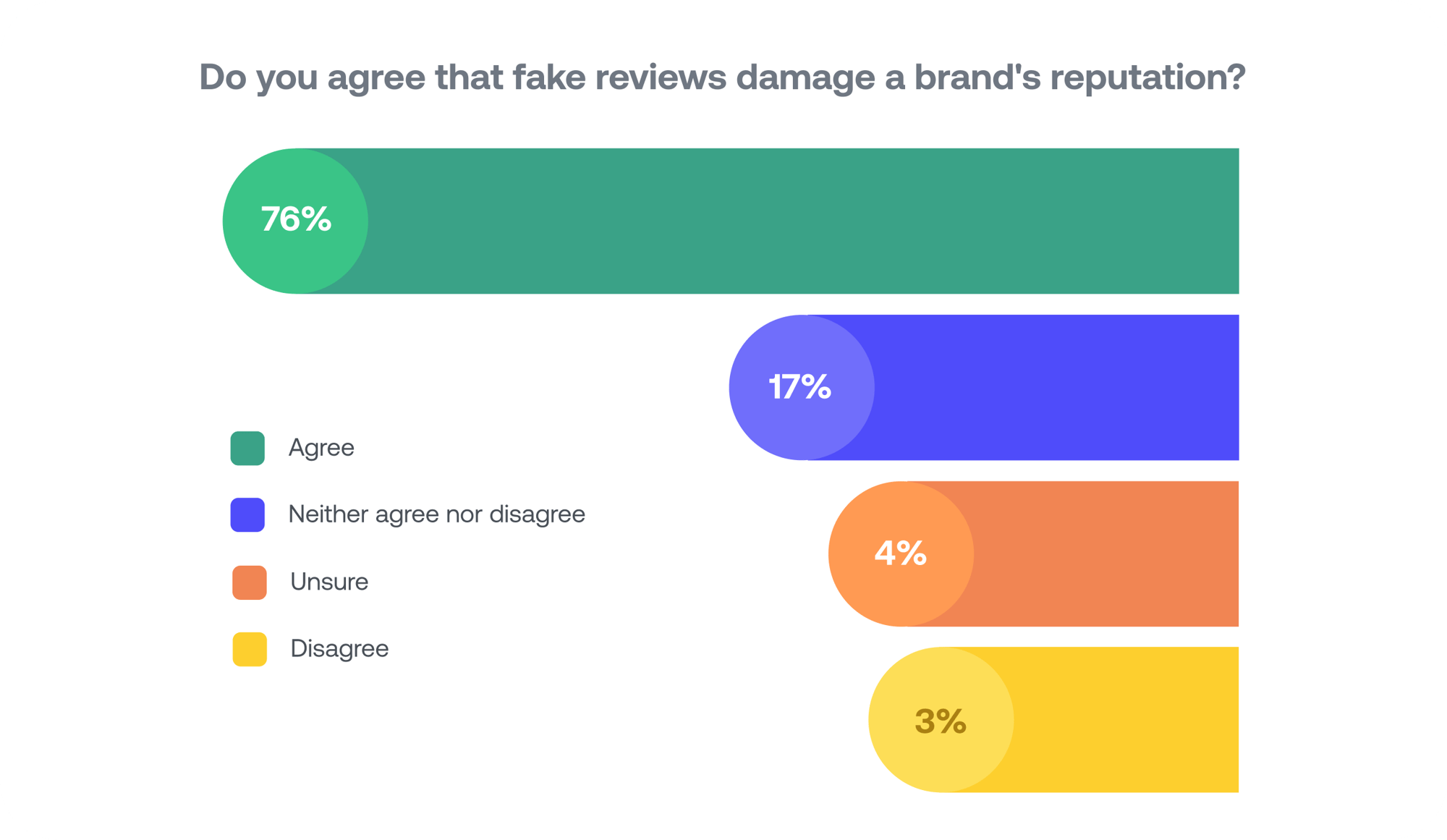
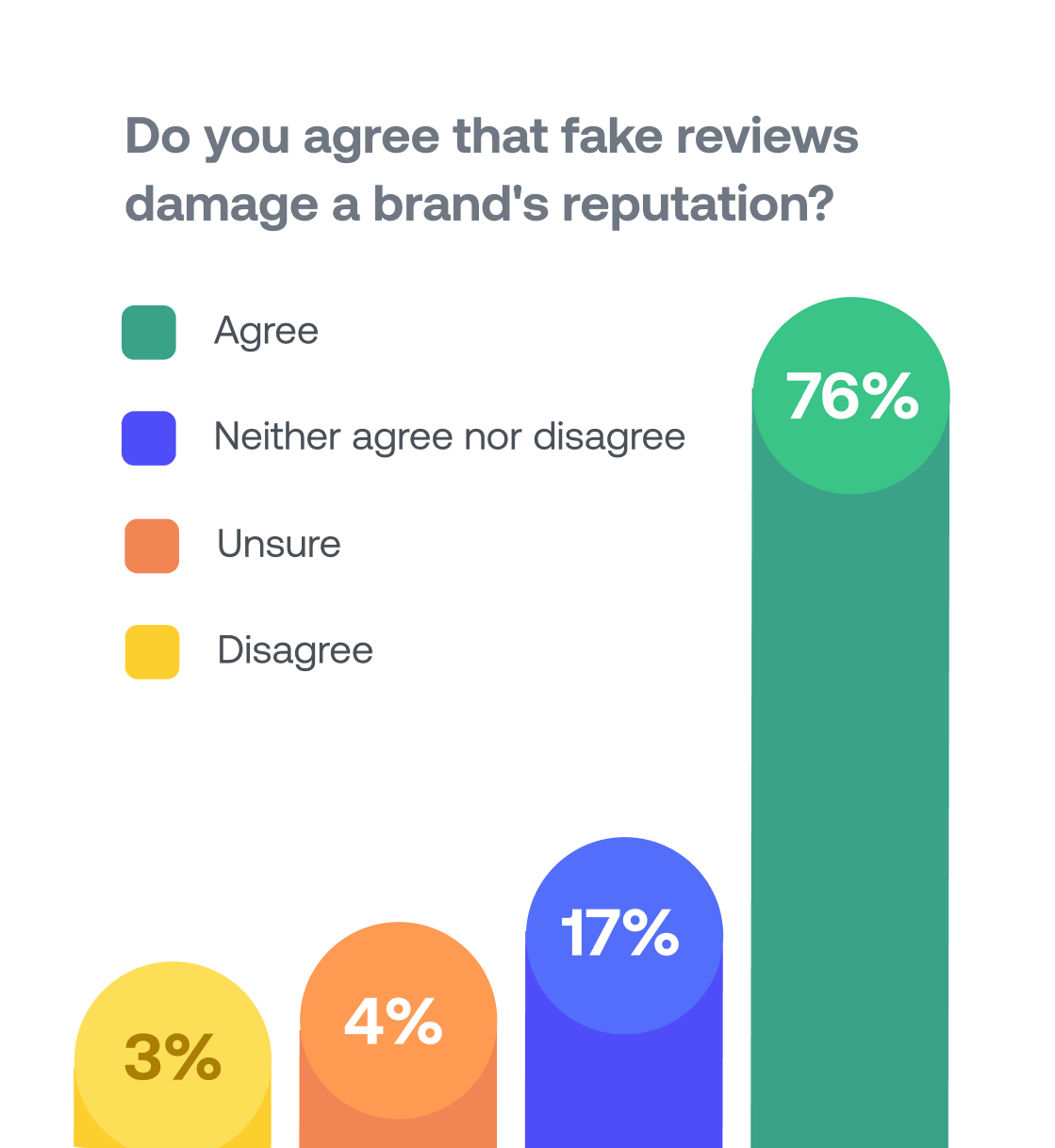
believe fake reviews actively damage a brand’s reputation
67% of consumers
prefer to buy from brands that feature genuine reviews in their advertising
2x the trust
Among consumers familiar with verified and open platforms, Feefo reviews are twice as likely to be trusted
10%+ uplift
in purchase intent from adding a verified review signal to advertising
Over Half
of consumers would avoid buying from brands that dont feature review providers in their ads.
Before Feefo, I spent years agency-side. I focused on reach, frequency, conversion. Something I’d never considered was how commercially significant verified reviews had become – not just on-site, but as an active driver of purchase decisions throughout the funnel.
Consumers are already cross-referencing platforms, scrutinising provenance, and making judgements about whether what they’re reading is genuine. Treating reviews as a commodity – collect them, put stars on your website, move on – no longer reflects how purchase decisions are actually made.”
Elliot Clayton, Chief Revenue Officer, Feefo
How modern consumers validate trust before making a purchase
The purchase journey is rarely linear. Before completing a transaction, consumers conduct a complex web of research – bouncing between reviews, influencers, comparison sites and AI search – making a quiet judgement on whether what they’re reading feels genuine. With more options than ever, consumers are no longer willing to guess. They require independent validation before committing.
Why independent reviews are now a prerequisite for trust
85% of UK consumers check at least one review provider before completing a purchase. For those aged 18 to 34, that figure rises to 91%. Reviews are no longer optional. The question isn’t whether consumers will look for them – it’s which ones they’ll trust.
Most consumers check multiple review sources to confirm trust
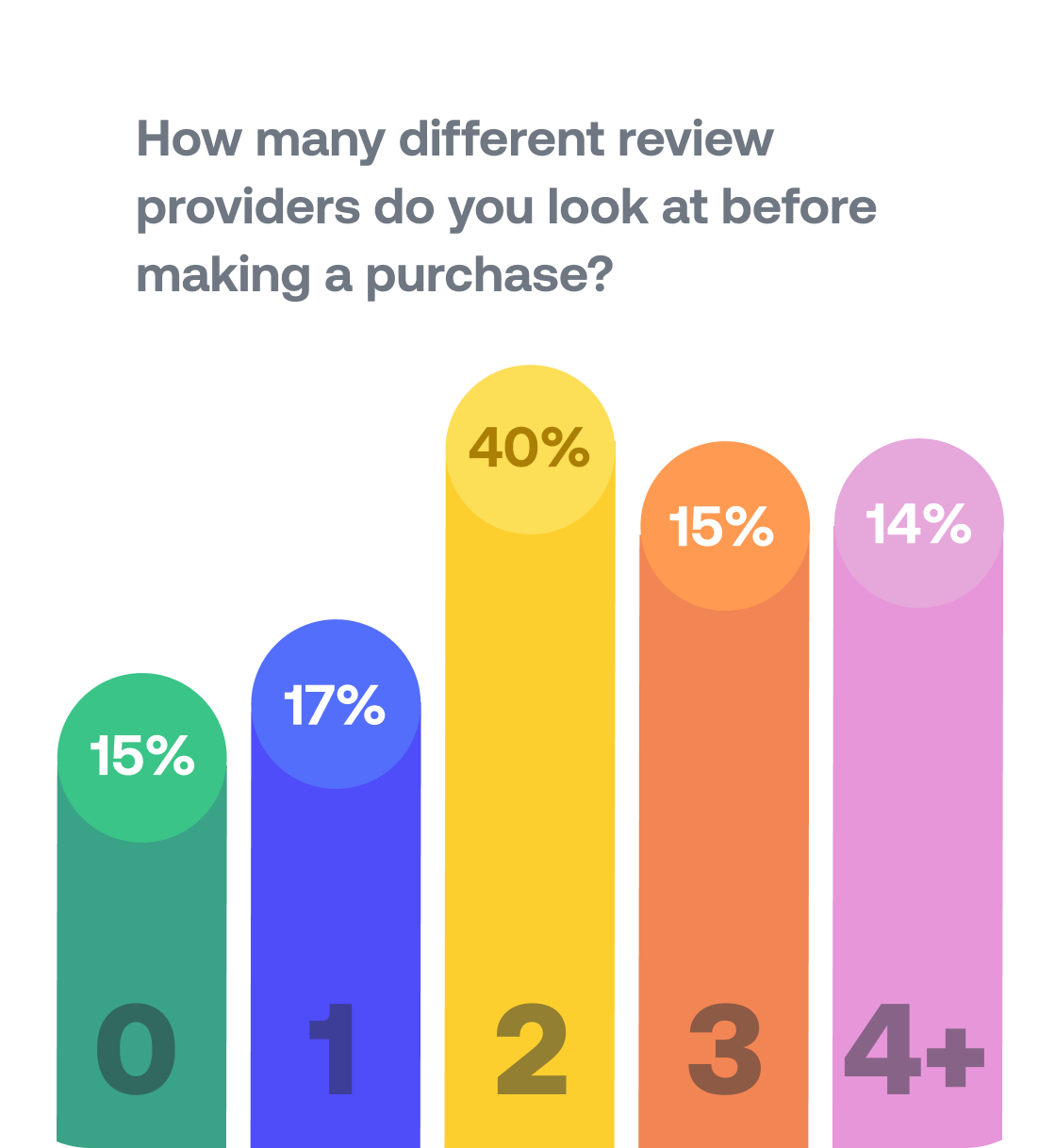
Our research revealed that 69% of consumers consult two or more review providers before making a purchase. Independent research supports this: 66% actively seek out a second source immediately after reading a positive review profile on the first.
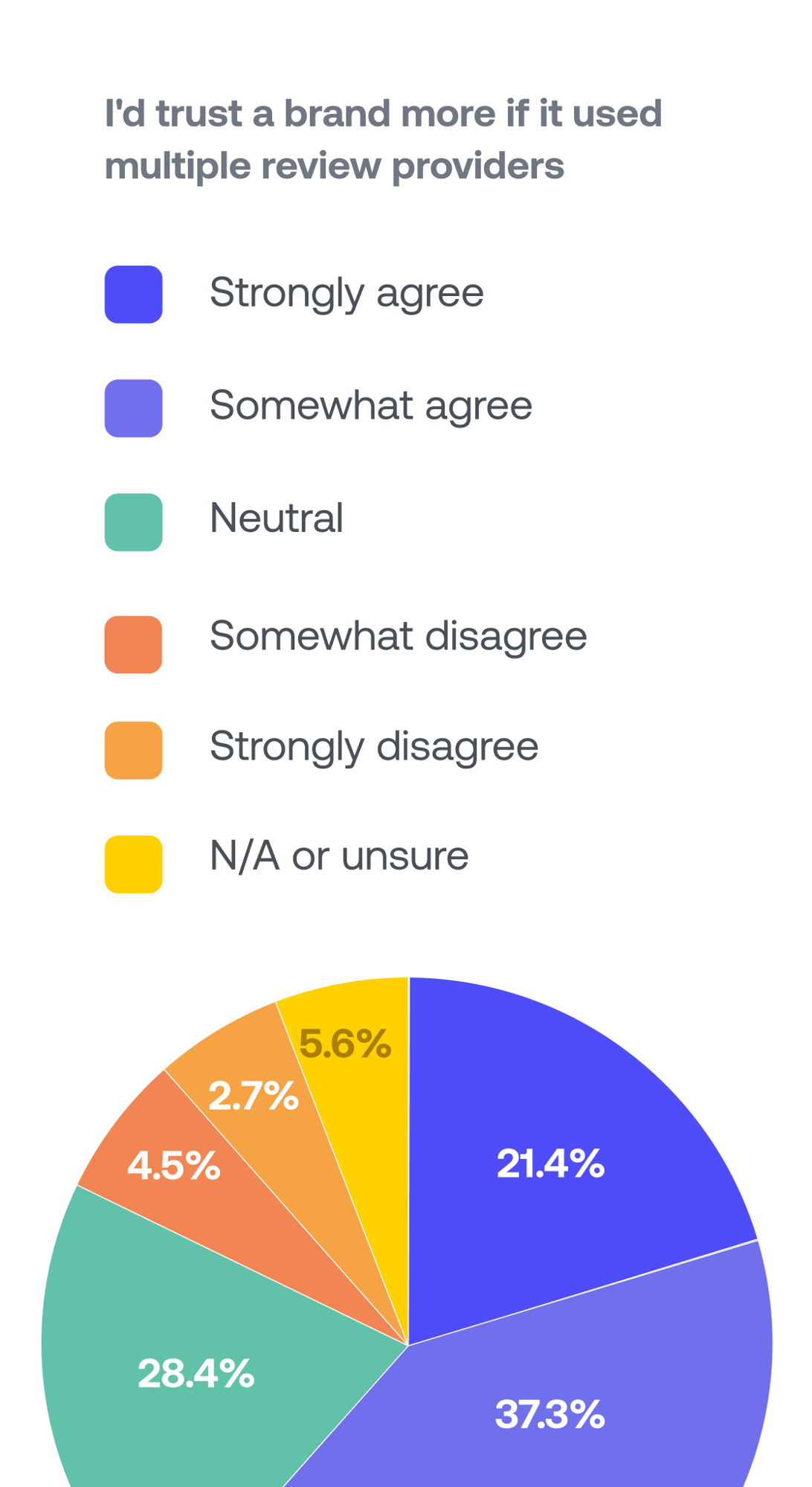
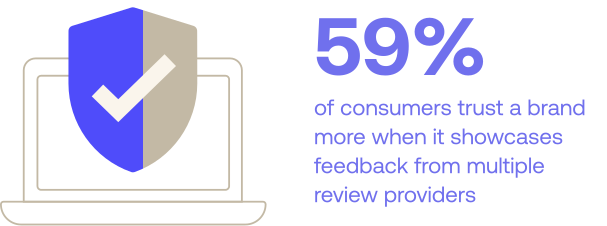
59% of consumers trust a brand more when it showcases feedback from more than one review platform. Most consumers look at one provider to gather their initial information, before using the second to confirm the first is correct. The question being asked – across every provider they check – is whether the reviews they’re reading reflect genuine experience.
Fake reviews are eroding consumer trust — and damaging brands
The growing market for fake and manipulated reviews
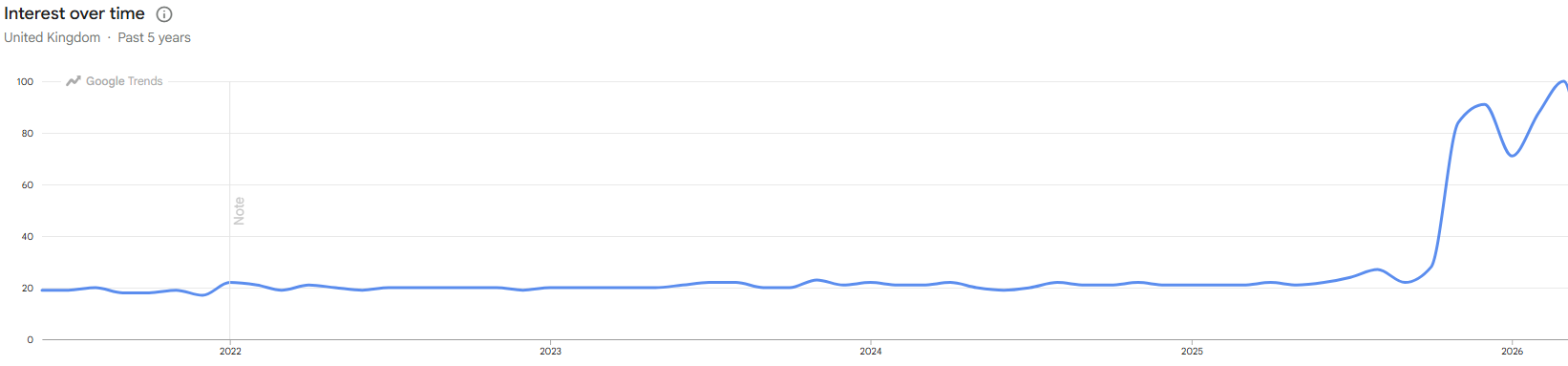
The pressure to display social proof has never been greater – and the market for manipulating it has grown to match. Google Trends data shows that search interest in ‘buy reviews’ reached its highest ever recorded index score in March 2026, up 376% year-on-year.
UK Google searches for "Buy reviews"
The problem is visible at scale. Google blocked or removed 292 million policy-violating reviews in 2025 – 22% of all reviews and up from 170 million reviews in 2023. Similarly, Trustpilot removed 7.4 million reviews in 2024, representing 7.6% of all feedback left on its platform that year.
The trade-offs inherent in open submission models, where anyone can leave a review regardless of whether they made a purchase, make them harder to moderate at scale.
Why consumers now assume reviews may be fake
Doubt is now the default position for the majority of online shoppers.
63% are actively worried about fake reviews before completing a transaction.
80% believe fake reviews actively damage a brand’s reputation.
The real commercial cost of fake reviews
That doubt has a direct commercial cost. A single competitor leaving malicious unverified negative reviews can cut a business’s revenue by up to 25%. The reputational damage from getting this wrong is rarely recoverable: 81% of buyers say they would permanently avoid a brand they caught displaying fake reviews.
The verification premium: why verified reviews earn trust
Consumers understand that open spaces carry an inherent risk of manipulation. Volume alone doesn’t reassure them – the process behind collection does. Our research is unequivocal. Among consumers familiar with Feefo and open platforms, Feefo are twice as likely to be trusted. Quite simply, this is because purchaser-verification answers the single most critical question a prospective buyer is asking: did this person actually buy it?
“The brands that will grow are those that recognise brand trust and commercial value are now inseparable. The data in this report shows what acting on that looks like – and what the cost of not acting is becoming.”
Elliot Clayton, Chief Revenue Officer, Feefo
How verified reviews increase advertising performance and conversion
Paid media is facing a crisis of efficiency. Capturing consumer attention has never been more costly, while the journey from a cold ad click to a confirmed conversion is increasingly fragile. As marketing teams invest significant resource optimising audiences and bidding strategies, ad creative is routinely left to do the heavy lifting without independent validation.
Why consumers respond better to ads that feature genuine reviews
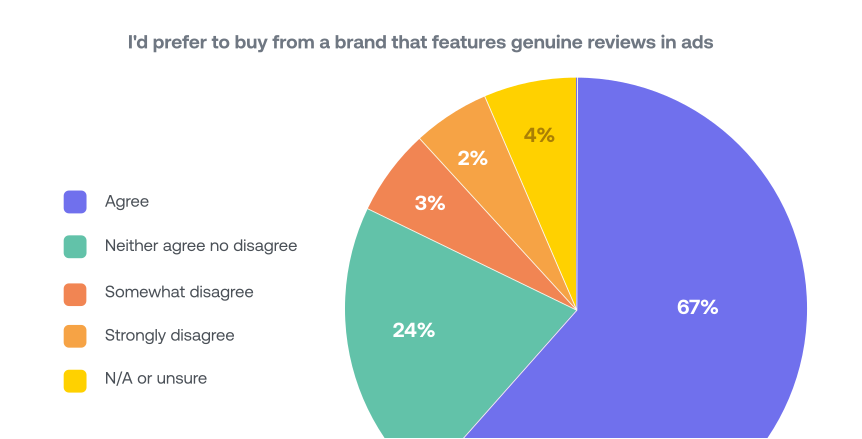
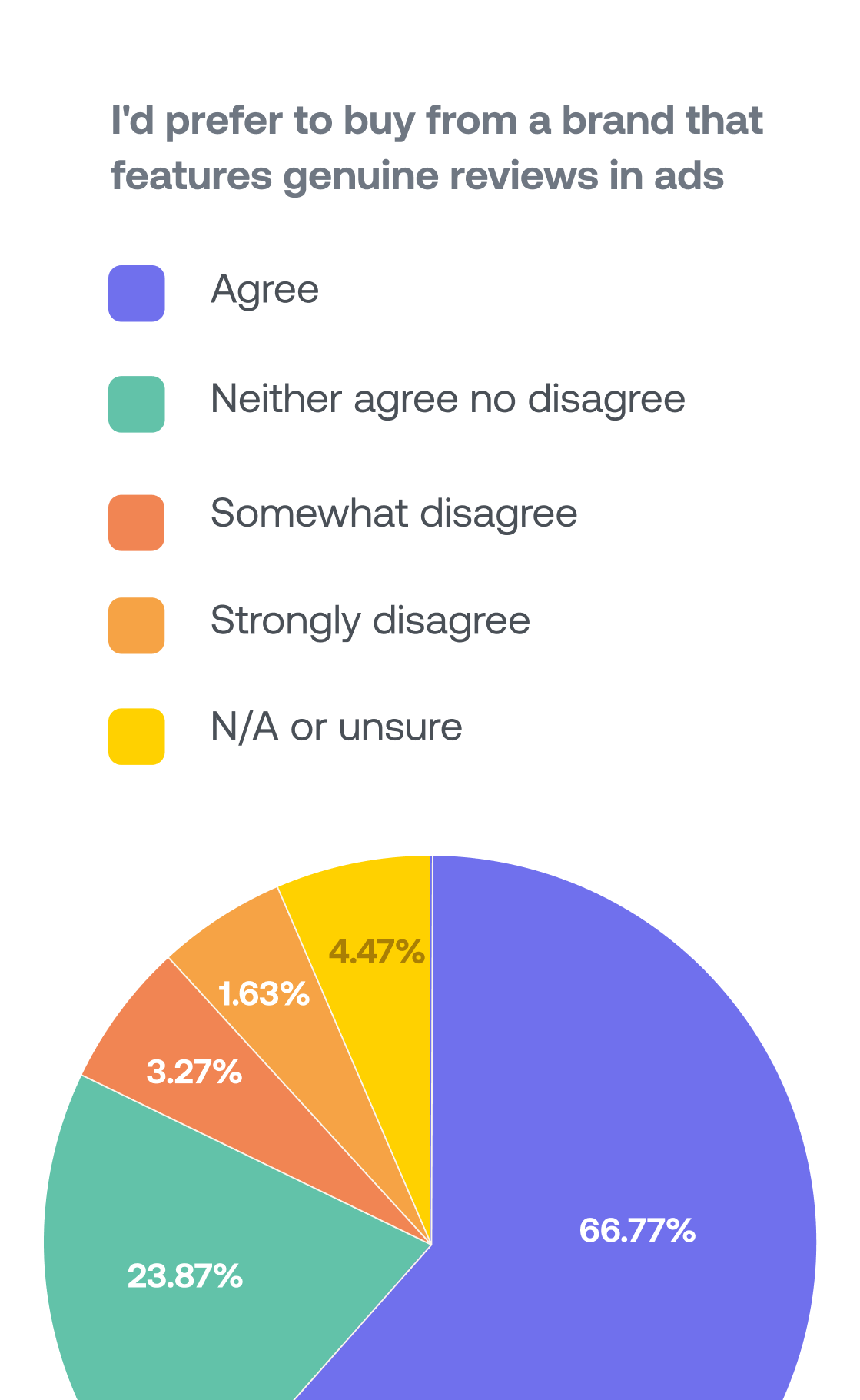
Two thirds of UK consumers (67%) explicitly prefer to buy from brands that feature genuine reviews within their advertising – yet a significant portion of paid media still runs completely without proof. Running unvalidated creative forces consumers to take a brand’s claims entirely on faith. And in an environment defined by scepticism, that friction is expensive.
The amplification factor: how verified reviews increase purchase intent
For brands already working with a review provider, the data points to a further opportunity. Adding a purchaser-verified signal alongside an existing provider consistently drives purchase intent higher than either provider alone – not because more logos create more reassurance, but because verified and unverified providers answer different questions for the consumer. One confirms familiarity. The other confirms that reviewers were real customers. Together, they remove more of the doubt that costs conversions. 59% of consumers trust a brand more when it uses multiple review providers. Our research found that rather than competing with existing assets, a purchaser-verified signal upgrades them.
Adding a purchaser-verified provider alongside an existing open platform drives total purchase intent to its highest measured point: 32.6%
That represents a 2.8% higher likelihood to convert than a single provider alone
A purchaser-verified provider alongside a recognised consumer body attracted the highest-intent audiences, with 11.1% rating themselves as very likely to convert, compared to 9.5% for a single open platform
Reducing CAC by improving creative, not increasing spend
Whichever way you look at it, a 10% baseline lift in purchase intent, or a 2.8% incremental conversion uplift for brands already using social proof, is achieved through creative execution alone, with no additional media spend. By carrying verified trust signals consistently from first ad exposure through to the landing page, brands eliminate narrative friction at every step of the purchase journey. The data tells us that verified trust signals in advertising improve conversion without increasing media spend; that’s a CFO conversation most marketing directors don’t currently have the evidence to start – but now do.
The verification advantage: Why verified reviews earn trust and compound value
Among consumers familiar with both verified and open platforms, verified reviews are twice as likely to be trusted.
Every behaviour documented in this research points to the same root cause. Consumers don’t value all reviews equally – they instinctively recognise that different platforms carry different levels of risk.
A star rating no longer automatically satisfies a prospective buyer. It sharpens the question of where that rating came from. A purchaser-verified review answers that question before it’s asked.
Purchaser-verification doesn’t just make reviews more credible. It actively intervenes at the point where scepticism would otherwise cost a conversion – replacing doubt with the one thing that resolves it: proof.
There is a second advantage that conversion figures alone don’t capture – one that compounds over time. When every review maps to a confirmed purchase, the data becomes a reliable read on real customer experience: by product, by location, by service type, by time period.
Brands collecting verified feedback aren’t only building trust with future buyers – they’re generating operational intelligence from existing ones. Patterns that would otherwise stay hidden become visible: a delivery issue concentrated in a specific region, a product attribute consistently driving satisfaction, a service theme quietly eroding rating week on week.
Verification is a structural decision, not a feature
97% of consumers say businesses should face serious consequences for manipulating or fabricating reviews. The DMCC Act – and equivalent legislation elsewhere – are moving in the same direction.
The brands ahead of this this aren’t treating verification as a compliance checkbox. They’re recognising it as a structural foundation – one that accrues over time through cleaner data, stronger conversion signals, and customer intelligence whose value depends entirely on the integrity of the source.
As consumer scepticism increases, trust and commercial performance are no longer separate considerations. The businesses outperforming in this environment are not hoping to be believed – they are proving it, consistently, from first impression to final decision.
Are you letting customers discover trust – or are you proving it everywhere they’ll look?
Download the full report
Download the full report for the complete data, chapter-by-chapter analysis, and the strategic framework behind the findings.
Fill in your details to access the full findings from our research.
About Research
Research conducted in partnership with Censuswide – 3,000 UK consumers, February 2026. This page is authored by Feefo and grounded in independently conducted consumer research.